
Little Update
 Greetings fellow readers. I have decided to bring "Morning Jane" Into the Stories section.
Life has been busy, but if you have been following (I hope!!) I think I owe anyone the rest of it.
Enjoy that tale set in the world of Persona Automata!!
The road is free for all to walk on!!
Back to top
“Only a sommelier from CHAT can confirm with certainty. Any exotics have to be reported and acknowledged.”
The Coffee Homogeny And Trade, the CHAT, was THE authority on coffee that all baristas had to answer to. Anyone could make a trundler's brew, but to be taken seriously? You needed training.
That meant her precious ingredient could be seized—and she could be audited. A bitter bean to swallow. On one hand, she might be holding the key to the most prestigious café in the world. On the other, she might have nothing but a one-way ticket to slinging brew for the Trundlers.
And at the exam? As long as your ingredients were genuine, you could proceed to make your brew—no questions asked. Bureaucratic madness, the kind that drove sane people to pour whiskey in their espresso.
But there was a slim window. Unless...
There were rumors. Hushed talk between traders and seasoned baristas. Whispers of a man who could tell fair from foul, genuine from forged.
The Market on 79th was still buzzing after all these decades. Fresh produce, homemade grains, and local produce filled every inch of the narrow lanes. No corporate stalls here — just human hands, weathered faces, and voices that knew each other by scent and tone.
Hanni had heard through a fellow student of a man who could tell the origin of any bean, any roast, down to the soil it grew from. Some said it was supernatural — that he could smell the humidity of a plantation or the ghost of salt carried by Pacific winds.
They called him Leche.
Once, he had been a rising star — a sommelier in training under CHAT’s strict hierarchy. But ambition had teeth. When he uncovered a secret deal between Sommelier Javier Fernández and a motorpool magnate’s daughter — an exchange of cacao for a guaranteed apprenticeship — he tried to report it. Before he could, Javier planted forged Costa Rica cacao in his locker and accused him of fraud. The committee believed the golden boy over the mechanic’s son.
Leche was stripped of title, of status, of access. He drifted to the market, where his senses became his trade — identifying counterfeits, advising smugglers, and sniffing out purity in a world addicted to genuine flavors.
That’s where he saw her.
A small figure riding a humming contraption, sunlight glinting off Mocha’s chrome trim. Hanni navigated the crowd with curious eyes, stopping to inspect bags of chicory root she planned to roast herself for her Chico blend.
She asked around quietly about a man named Leche. One stall owner — a woman selling hydroponic basil — nodded toward the row of vending machines. “He’s usually there ‘round this time,” she said.
Mocha rolled over and parked beside a cluster of flickering vending machines. A man in a frayed apron sat nearby, tapping a spoon against a thermos.
“Are you Leche?” Hanni asked.
He looked up, his eyes sharp despite the fatigue in them. “Depends. What can I do you for?”
“I was told you were once a barista.”
“I was,” he said flatly. “Lemme guess — student?”
“Working on my master’s certificate.”
“And I give a damn why?”
Hanni produced the capsule and set it on the table. The dull plastic caught the light, and Leche’s eyes widened. “Are you kidding me?”
He snatched it up, scanning the seam and the serial code with a sniff, then gestured toward the convenience store behind him. Inside, he sat down heavily, gesturing for her to follow.
“Where’d you find this?”
“Near my stall, close to the square.”
He cracked the capsule slightly and drew in the aroma. For a moment, all the cynicism melted from his face.
“Know what you’ve got?”
“No,” she said. “That’s why you’re here.”
“It’ll cost you.”
“Your price?”
He held the capsule up like a priest with a relic. “One bean.”
Back to top
She sighed “Yeah, go for it,” Hanni replied, tapping the confirmation on her tablet. Being a student has it's overhead and the piper had to be paid in order to get that space she had.
“Stu,” she said, voice low and conspiratorial, “remind me again why I loved these moments of silence?""
“Because subtle anomalies are easier to detect before the chaos,” Stu replied. “Probability of finding rare or misplaced items: seventy-seven percent.”
Hanni smirked, sliding Mocha’s lift closer. “Guess we’re going on a tiny treasure hunt before end of shift.”
She had found only a few items so far: a servo chip, a misplaced key, a pair of gloves. Carefully, she dropped them into a “recovery bag” marked with her stand number. Misplaced items could be surrendered to a local collection box and sent to a central office, where the rightful owner could reclaim them. Each bag counted toward a finder’s fee, automatically credited to an individual account.
For Hanni, her height gave her a unique advantage. From her perch atop Mocha’s lift, she could spot small things hidden beneath counters or wedged between seats. It translated into easy pocket money — always welcome for an apprentice barista.
Apprenticeship wasn’t cheap. The school fees covered the stand and raw materials and stand space. Extra credits from recovered items helped bridge the gap when making ends meet.
Her keen eyes caught something in a corner that didn’t belong. A small, nondescript capsule, tucked beneath a support beam. Hanni pried it open and gasped. Inside were cacao beans — real Galápagos cacao. The kind every apprentice dreamed of, whispered about like treasure in the quiet corners of the Empire State Café.
Cacao had become rare since the Collapse. Supply chains were frugal, and CHAT regulated production strictly, ostensibly to protect the environment. Nature needed to recover; unsustainable harvesting was forbidden. The result: cacao was expensive, precious, and nearly impossible to come by.
And for Hanni, these beans weren’t just a novelty. To graduate to full barista status, she would need to master a drink or invent one. The ultimate test: the Firmament Mocha. Crafted with Celestial beans — a blend of the three rarest coffees on Earth — and the coveted Galápagos cacao, it was the ticket to Quasimodo’s Hangout. A single successful brew could secure her placement at New York’s most prestigious café, the envy of baristas everywhere.
Hanni held the capsule like a jewel. The weight of possibility pulsed in her fingers. She was small, yes, but in this moment, she felt the scale of the world bend to her advantage. The challenge was immense — almost a lifetime’s worth of work packed into one cup — but she grinned. Challenges were meant to be met, and Hanni Cho had a her dullard-lift, a servitor, and a smart mouth. That would have to be enough.
There was only one problem: how could anyone be certain they had the real deal? Two things made Hanni’s discovery both thrilling and terrifying.
The first was cardinal sin among baristas: mislabeling ingredients. If you lied about what you were brewing—or were caught being ignorant—you weren’t just incompetent. You were a cheat, a purveyor of decoctions, a barista unworthy of the title. In the world of Coffee, reputation was everything. Many aspiring baristas had been shamed into obscurity for far less than a misstep with rare cacao.
The second danger was imitation. Smugglers had cultivated a knock-off: Costa Rican cacao, grown from seeds stolen long ago from the Galápagos strain. It looked similar, smelled familiar, even tasted decent to the untrained tongue. For everyday sweets, pastries, and novelty brews, it was tolerated — even celebrated as clever ingenuity.
But for the Firmament Mocha, the ultimate test of skill, the use of Costa Rican cacao was a death sentence. One sip by a trained sommelier could expose the fraud. One wrong move could erase years of effort, and possibly Hanni’s dream of reaching Quasimodo’s Hangout.
Hanni held the capsule carefully, turning the beans in her fingers. Small as she was, she felt the weight of centuries of coffee tradition press down on her. A tiny barista on a lift, staring at a handful of beans that could make or break her future. The question loomed larger than her frame: real Galápagos cacao… or a clever Costa Rican imitation?
Back to top
The New York City skyline kissed the morning sun that Monday, and even as the city that never sleeps learned to rest post-collapse, the faint scent of roasted beans drifted through the streets. Hanni had been awake for hours, preparing the coffee that would soon sell out of her micro-stand. Mocha, a retrofitted warehouse dullard, chirped insistently, indicating she was at full charge.
“Good morning, Hanni. Slept well?” Stu asked, his polite mechanical voice floating near her ear. The servitor was part of her apprenticeship package, keeping her grounded in measurement, ethics, and proper technique.
By 3:00am, she was dressed and at work. A step-stool helped her reach the canisters of pre-made coffee, which she mounted on Mocha’s lift with practiced precision. Each batch of Trundler’s Brew required exact ratios of chicory and coffee grounds — too little or too much could ruin the morning rush.
Hanni noticed the chicory running low. “Mocha, to the cupboard,” she said, hopping onto the dullard’s platform. The lift rose smoothly, bringing her to the shelves with ease. She grabbed a bag of roots and returned to the counter without breaking stride. Stu ran through the day's schedule in that pedantic, academic tone of his, offering quiet reminders, while Mocha’s whirring gears hummed in rhythm with her motions.
Stock ready, she slid a wedge under the door, letting Mocha slip through. She made her way to the service elevator and descended to street level. Mounting Mocha’s back was effortless; her four-foot frame made the ride smooth, almost like riding a gentle wave. Around her, the sidewalks teemed with commuters, carts, and Trundler vendors, but from her perch, she could navigate the chaos with ease. By the time she reached her assigned stand in Manhattan, the morning rush had already begun — and so had her day.
Her assigned space wasn’t wide — just enough for the awning and Mocha, who hummed quietly as Hanni weaved between counter and grinder with practiced ease. Commuters flowed past, and soon the familiar beep-beep of thumblers registering payments and mondos tagging on her reader filled the air.
“We’ve made our student fee already,” Stu announced, keeping meticulous track of sales. “Shall I send it now?”
“Yeah, go for it,” Hanni replied, tapping the confirmation on her tablet.
Once the morning rush subsided, the awning’s solar cells had fully recharged Mocha and Stu. Hanni sank onto a low stool for a brief lunch, munching on rice balls from a neighboring stand while scanning her records. She checked the levels on her coffee urns, ensuring she’d have enough stock for the afternoon crowd.
School would let out at three, and the girls adored her Chico — the full-chicory brew she had perfected with a dusting of nutmeg, sometimes transformed into a café au lait with her own twist on an old New Orleans recipe. Occasionally, Trundlers zipped by for leftover morning brew, thermoses in hand. Hanni handed them up from the lower counter, bending slightly so her four-foot frame worked naturally with the setup. She never charged — waste was anathema to her, and seeing a cup poured, a blessing to all.
Then a familiar voice cut through the bustle.
“Hey Hanni, brewing trouble?”
Hanni glanced down from the lift, spotting Trent leaning casually near the edge of her stand. She raised an eyebrow. A Familiar face came, clothed in attire that had been patched up so many times that it was a tapestry of repairs.
“Hello, Trent. When did you get into town?”
“Dropped off at the moto-pool about two hours ago. Came in from Syracuse. Missed your brew… and your smile.”
Hanni tapped a button on Mocha’s lift, elevating herself to his eye level with a smooth hum.
“Just those two things, Trent,” she said, smirking, “or are you here to see if you can conquer the Queen of Beans?”
Trent laughed, tilting his head. “Might be tempted to try. But I’ve heard the queen doesn’t lose easily.”
“Good. I like a challenge… especially the ones who talk too much,” Hanni replied, going down and hopping off from the lift.
Stu cleared his throat from Mocha’s shoulder. “Probability of verbal defeat: fifty-three percent, depending on espresso distribution.”
Hanni shot him a sharp look. “Thanks for nothing, Stu.”
A commotion near the next table caught her attention. “Ah, fiddlesticks!!” a man muttered, fumbling over something on the floor. “I dropped it… my back’s killing me.”
“Alright, small gal to the rescue,” Hanni muttered. She slipped under the table, fingers brushing the floor until she snagged the man’s glasses, and she re-emerged, glasses in hand, smiling triumphantly.
“Every time, Sven,” she said, shaking her head. “Put your glasses on a cord already!”
Even in the chaos of the morning, Hanni navigated her stand like a puppeteer: Mocha her limbs, Stu her memory and conscience, herself the strategist. She was small in stature, yes, but precise, commanding, and clever — an apprentice of the bustling caffeinated cathedral that was post-collapse Manhattan.
And somewhere in her bag, carefully hidden from the morning crowd, rested a small treasure: a seed of Galápagos cacao, rare and precious, and soon, the source of a huge headache!!
Back to top
This continued through the COVID pandemic, where technology—developed in extremis—allowed for a refinement of remote work. Better infrastructure, ideas, and concepts flourished under pressure.
After COVID, when employers stubbornly tried to bring their employees back into the office, many of these nomads simply remained.
And then, the Great Collapse came.
Nomadic folk were largely immune to what followed, as they already lived lifestyles independent from stable, fixed systems. When people opted out of their debts, the nomads had little to abandon. They already lived in a cash-only economy, and the Mondo—the spiritual successor to bitcoin—became their currency.
While some landlords and businesses clung to old methods—credit scores, proof of income, and the like—others began to accept this new crypto. There were more people willing to use it, and more people willing to be paid with it.
The world economy bifurcated, and governments had no real way to stop it. Oh, they tried—but the collective blowing of raspberries became too much to contain.
The Americans were the first to fall, shaped by a culture that treated rich men as moral exemplars. The wolves of Wall Street found out that the sheep were no longer playing. North America fell, and Europe followed. Some smaller countries adapted to the Mondo, much as they once had with the Euro, finding it fairer. Many African nations adopted it as well, as buying from neighbors became less of a hassle, and many developing countries followed suit.
The nomads—skilled and willing to travel—found their name when the Dullards came along. As the automatons trundled down the roads, the nomads rode atop them, like the stagecoaches of old.
So today, when you see a Trundler signing a welcome to another, with a pack on their back and a tabby at their hip, remember: their journey began long before the road was free to walk.
“The sun rises on all of us.
The sun sets on all of us.
Nobody is above another.”.
Back to top
As small as can be.
But remember that the mighty oak
Was once a nut like me!
There is something to be said about acorns as a food source. For centuries, that food kept people alive. In many parts of the world, people didn’t just survive on it—they thrived.
During the times of scarcity, Marcus Whitedeer, a youth of the Pomo tribe and an unabashed foodie, was helping his aunt with a batch of acorns. They were preparing them into meal for the coming breakfasts.
They were not poor by any means. The land was bountiful for those wise enough to understand it. But in those days, getting things people wanted to trade for was a bit of a challenge.
As he cooked acorn cakes, Marcus poured himself some coffee and wondered,
There’s got to be a way to make something people would want… or even like.
Then he remembered.
Hey. People used to eat those hard breadsticks. Biscotti.
Acorn cakes were already common, but after looking up old biscotti recipes, Marcus took the basic acorn cake method and combined it with the double-bake process used to make biscotti.
The end result was dark, nutty, and easy to dunk into a cup of Trundler’s brew.
In less than two years, the Acorn Biscotti, first made in California, found its way all the way to New York—showing up in stalls, vending machines, and motorpools everywhere.
The Road is free for all to walk on!
Back to top
High-end restaurants vanished early—too fragile, too dependent. In their place, coffee shops spread through cities like roots. Many began as soup kitchens, offering free or low-cost meals when nothing else was reliable. Over time, they evolved into nutrition halls: simple food, grown close to home, fortified grains, vegetables, small proteins. No frills. No starvation. Every city made sure of that.
The rule was simple: food sustains, coffee connects.
Meals became functional by design. Culinary excess was replaced by accessibility and health. Complexity still existed, but it served skill and efficiency, not status. You ate to live. You drank coffee to think.
Coffee shops became the new civic centers. People met there to barter, plan, argue, repair, and rest. Hackers shared tables with Trundlers. Deals were made over chipped mugs. Ideas changed hands faster than currency ever did.
Two brews dominated most counters: Full Charge and Trundler’s Brew. One signaled prestige and refinement, the other mobility and endurance. Neither was judged outright—only chosen.
Brewing itself turned ritualistic. Roasts, methods, grind size, charge percentages—these carried the social weight table manners once had. A well-prepared cup earned respect. A careless one earned silence.
Cafés became stages. Not for elites, but for everyone.
At the base were the old soup kitchens, now nutrition halls—open to all, focused on survival. Above them came standard coffee shops: meeting places, experimentation zones, hubs of culture and conversation. And at the top, rare and coveted, were Full Charge cafés—places of performance, debate, and near-religious attention to the craft.
Food became universal. Coffee remained aspirational.
And nowhere was this clearer than New York.
The Empire State Building still stood. But it no longer housed offices or executives. Floor by floor, it had become the world’s largest coffee shop. Each level served different roasts, different methods, different charge grades. Some brews were so rare they were only poured above certain floors. People traveled continents for a single cup.
They called it the Caffeinated Cathedral.
In the Cyber-Renaissance, no one starved. Everyone ate well.
But the faithful still climbed for the perfect brew.
Back to top
Doesn’t matter what it is.
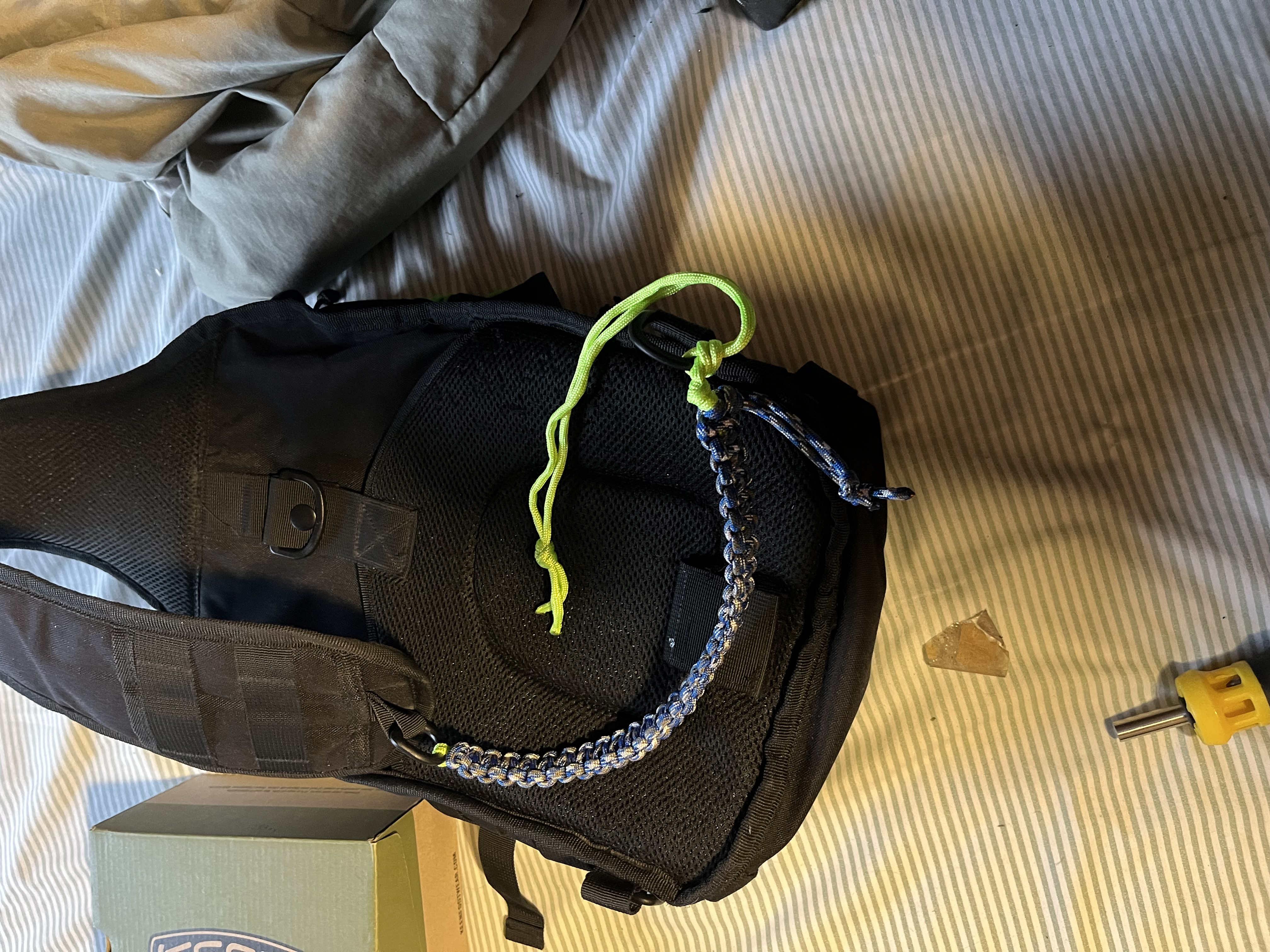
So when the buckle on my shoulder bag broke (slammed a car door on it), I got annoyed. My first thought was to order replacement buckles online. Then it hit me: I don’t have to.
I’d recently gotten back into making paracord bracelets, teaching myself not to depend on purchased buckles. And that’s when the obvious solution appeared—I could use that same knotwork to repair the bag, and even make it better.
The picture you see is the result.
A little paracord here, a little knotwork there, and voilà. Good as new. Maybe better.
The road is free to all to walk upon..
Back to top
Yusuf scanned the airwaves, waiting for a signal. Much like listening for a steam whistle back in the day, he kept an ear open for radio chatter..
“This is cargo run 506, calling control. Skies are blue and road is clear. Passengers are steady, expecting another pick-up at junction nine.”.
He grinned. His request for a ride had been answered..
An hour later he was riding down what was once an interstate, a'top a machine that made it's way in the mid-west like a migrating beast..
The road is free for all to walk upon!!
Back to top
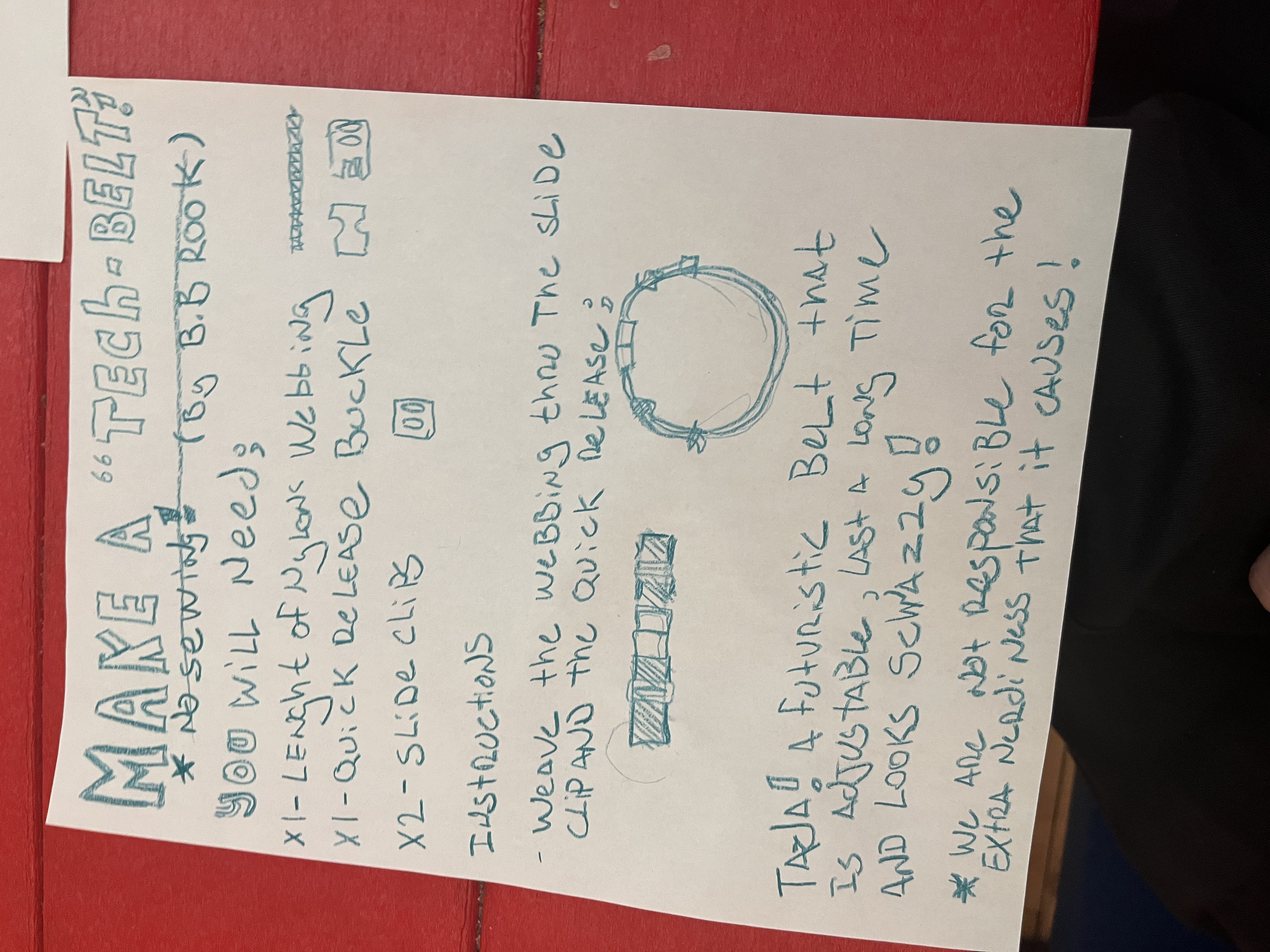
These are messages I planted in a children’s museum. Not instructions. Not lessons. Just ideas—left where curiosity already lives.
What happens if the internet disappears?
Paper, pen, simple parts.
If they want a say in the future,
I’m not interested in utopias, and I have no appetite for dystopias. Both feel too clean, too neat, too smug in their certainty—or else they simmer with a pessimism so heavy it makes a brooding teenager look like a ray of sunshine.
There’s a lot of rain in cyberpunk, and I’m not going to blame it on the rain.
Instead, I prefer to look at those grand labels and blow a well-deserved raspberry at the whole concept. I’d rather live in the messy middle ground where humanity has always existed: hopeful, worried, stubborn, resilient, ridiculous, brilliant—and doing its best with what it has left.
So I’m pouring a cup and inviting you into that space. A future that didn’t get hit by a meteor, didn’t endure a zombie pandemic, wasn’t invaded by aliens, and—God forbid—doesn’t hinge on yet another “chosen one” destined to save the human race.
This is a world that grew not from perfection or despair, but from the strange, honest parts of being human: a cup of coffee in hand, and a robot for company.
A world born from being unemployed far too long, drinking too much coffee per day, and carrying a simple desire to imagine a future where we can finally breathe for once.
PERSONA AUTOMATA will be a 100% human-authored mosaic novella (approx. 21000 words) built on a simple premise: What happens when society stops being "users" and starts being "makers" again?
Consider:
Morning Jane - Section 3: Seeking the Outcast
Back at her appartment, she mulled it over. “Stu. Any idea how I would find out if I got the genuine article?” Morning Jane - Section 2: The Weight of the Bean
“We’ve made our student fee already,” Stu announced, keeping meticulous track of sales. “Shall I send it now?”Morning Jane - Section 1: The Morning Rush
NOTE: This is the beginning of the many short stories you will find in the world of "PERSONNA AUTOMATA". These will be serialized for your reading pleasure. Over time, as these serials are moving along, they will eventually compiled in the "STORIES section."How Did the Trundlers Come to Be?
The Trundlers as we know them found their roots in the Digital Nomads that rose in the 2010s. They were people who worked remotely and lived a nomadic lifestyle, jumping from one country to another in search of a better cost of living.Little Acorns.
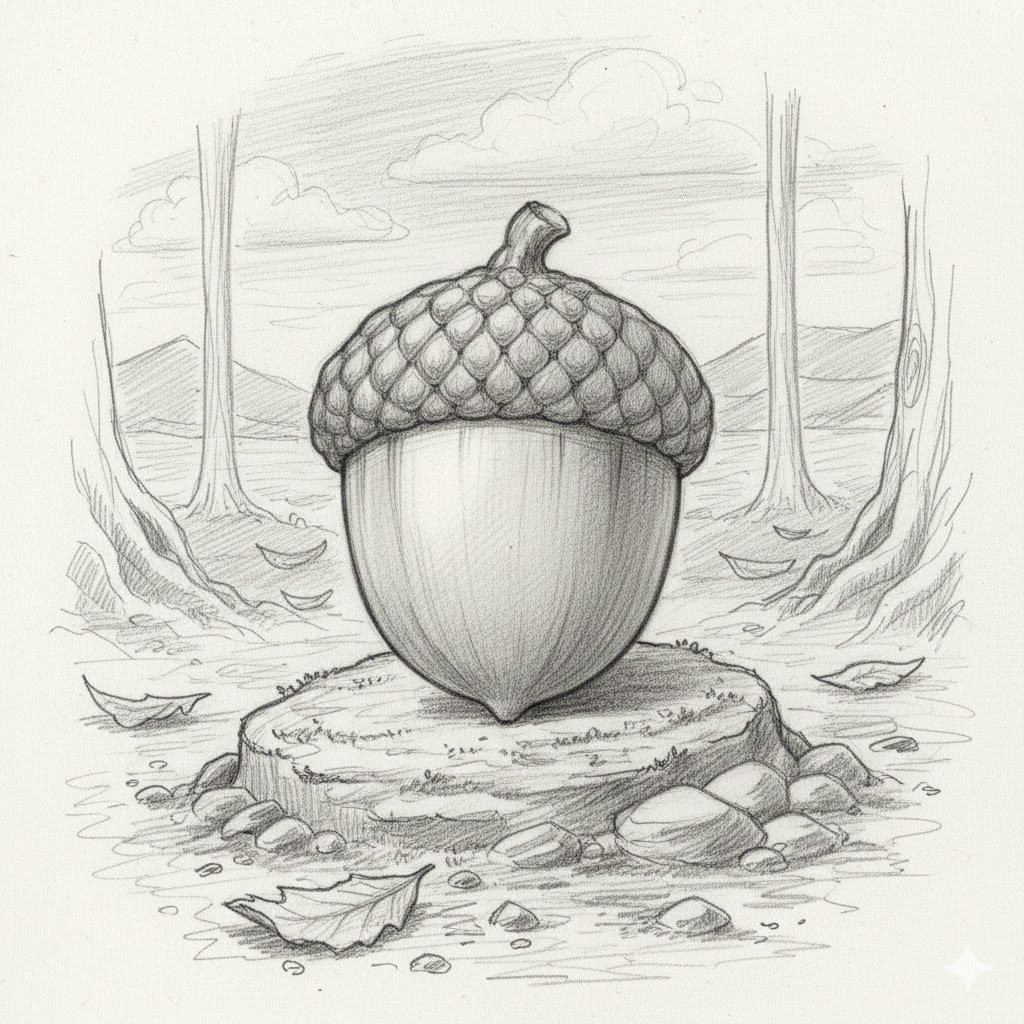 I am a little acorn,
Coffee Shops: Hubs of the Cyber-Renaissance
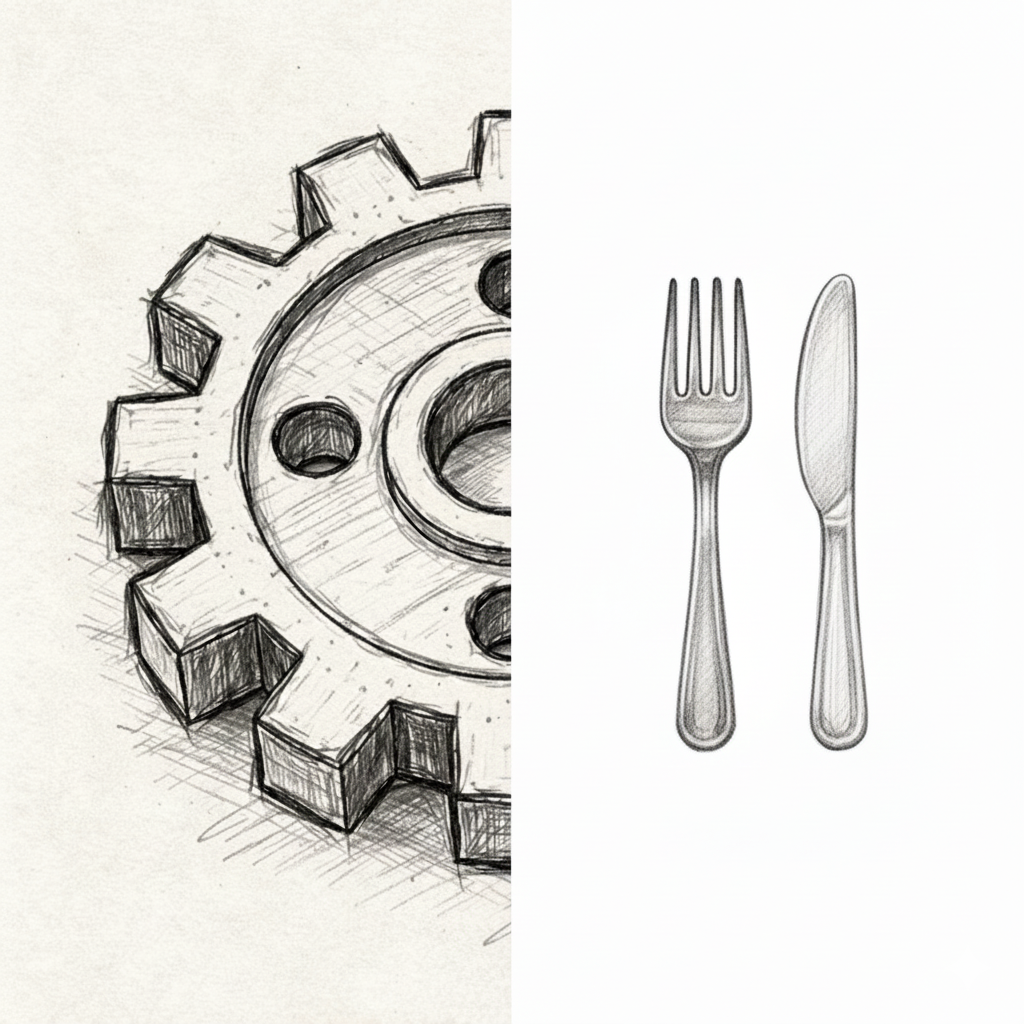 After the collapse, people had to relearn how to eat, how to gather, and how to be together. The solution wasn’t palaces or fine dining. It was coffee.
Bag Repair
 I am a firm believer in the right to repair.
PERSONA AUTOMATA VIGNETTE: THE RIDE
 By the mid-2030s, Cargo-Dullards had replaced trains and tractor-trailers. Buses and rail were long gone. The collapse had done to gas-powered vehicles what the oil barons once did to steam engines.
Ideas Planted
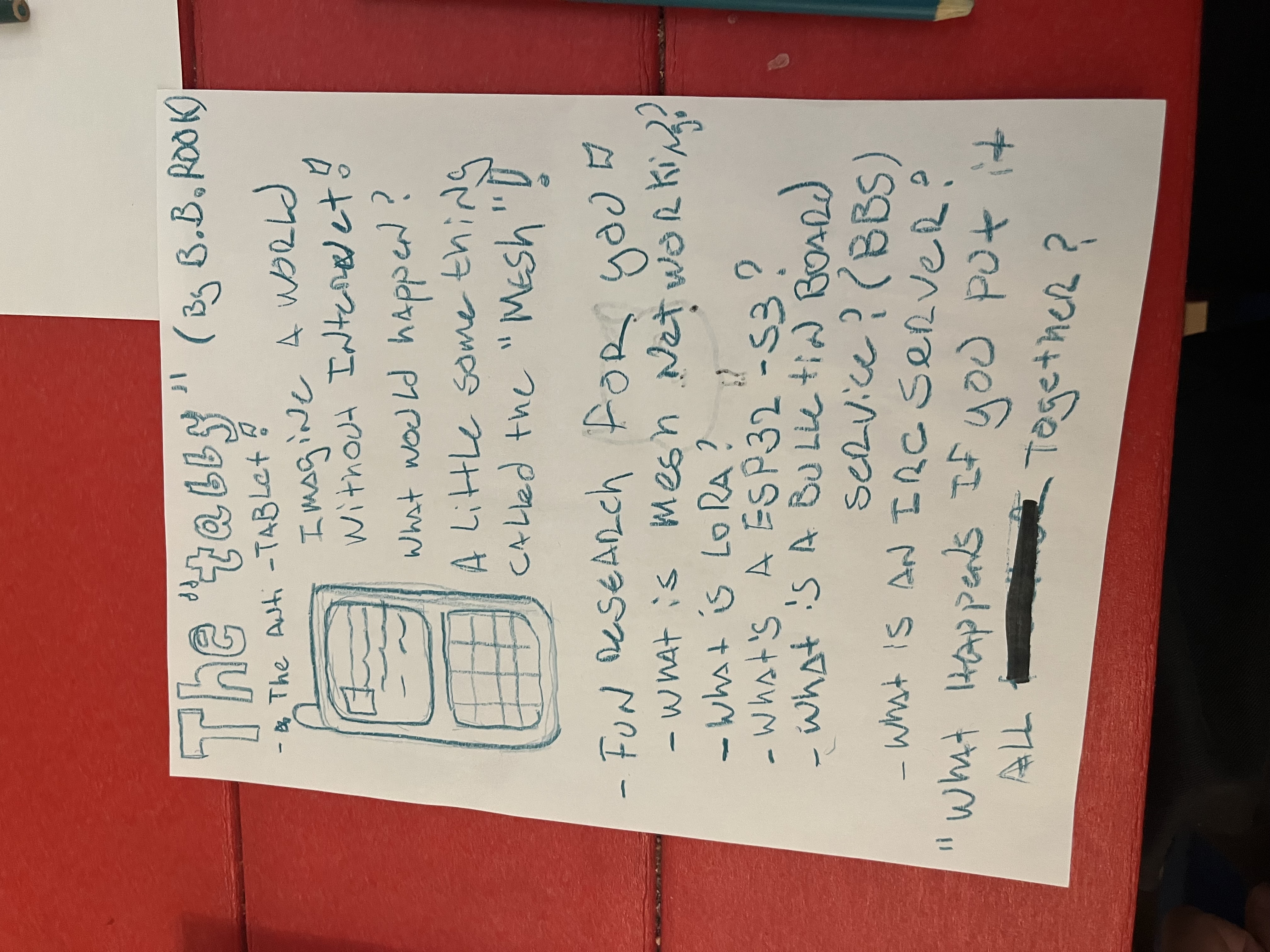
What is mesh networking?
What does it mean to build something yourself?
A belt you can make without sewing.
A network that doesn’t ask permission.
they’ll have to build it.
One bit at a time.
On the matter of dystopian fiction
The First Entry: Supplemental.
 This would be the official logo for PA (Persona Automata). This promises to be a fun experience for people on the "Small Web".
The First Entry
These elements form the backbone of Persona Automata. It is an "Industrial Folk Tale" that will appeal to digital nomads, Makers, and readers who want sci-fi that isn’t about shiny, fancy pants tech, but about the grease-stained roboteers from down the street.
Want to learn more? Find out more HERE!!